Computational Scientist · Applied Mathematician
Turning uncertain, expensive simulations into decisions you can defend.
Building the mathematical methods and open-source software that let scientists and engineers trust their predictions under uncertainty.
Invited Tutorials
About
John Jakeman is a computational mathematician who builds the methods and production software that make physics-based simulations and machine-learning models reliable for high-consequence decisions. He pairs deep applied mathematics — operator learning, surrogate modeling, multifidelity methods — with software engineering, and his work has been cited 6,000+ times (h-index 32).
He is the founding developer of PyApprox, an open-source Python toolkit for sensitivity analysis, Bayesian inference, optimal experimental design, and multi-fidelity UQ. His research has been applied across fusion and plasma physics, aerospace design, earth science and ice-sheet prediction, continuum solid mechanics, additive manufacturing, and hydrology — funded by DARPA, the DOE Office of Science (ASCR), and Sandia's LDRD program.
Beyond research, John is a competitive Masters sprinter — a four-time medallist (two gold, two silver) at the US national Masters indoor championships over 60 m and 200 m. He represented the Australian Universities side in rugby and competed against international teams in sevens, and played for the Canberra Vikings.
Associate Editor, Journal of Machine Learning for Modeling and Computing (Begell House) · Organizing Committee, SIAM Conference on Uncertainty Quantification (UQ26), 2026 · Chair, DOE ASCR Basic Research Needs Workshop on Inverse Problems, 2025 · Full CV →
Areas of Expertise
Mathematical methods that turn computational complexity into actionable insight.
Uncertainty Quantification
Propagating and quantifying uncertainty in computational models to enable risk-informed decisions.
Surrogate Modeling
Polynomial chaos, sparse grids, Gaussian processes, and tensor decompositions for expensive simulations.
Multifidelity Methods
Combining models of varying fidelity and cost for efficient prediction and decision-making.
Optimal Experimental Design
Designing experiments and computational studies that maximize information gain per unit cost.
Bayesian Inference & Inverse Problems
Parameter estimation and model calibration under uncertainty from noisy, indirect observations.
Trustworthy Scientific ML
Building reliable AI for science through rigorous verification, validation, and uncertainty-aware operator learning.
Research Applications
Where the methods meet real-world impact — each domain driven by the author's own research.

Earth Science & Ice-Sheet Prediction
Quantifying uncertainty in ice-sheet models and sea-level projections

Radiation Transport & Fusion
Non-equilibrium transport modeling for reactor and fusion systems
Continuum Solid Mechanics
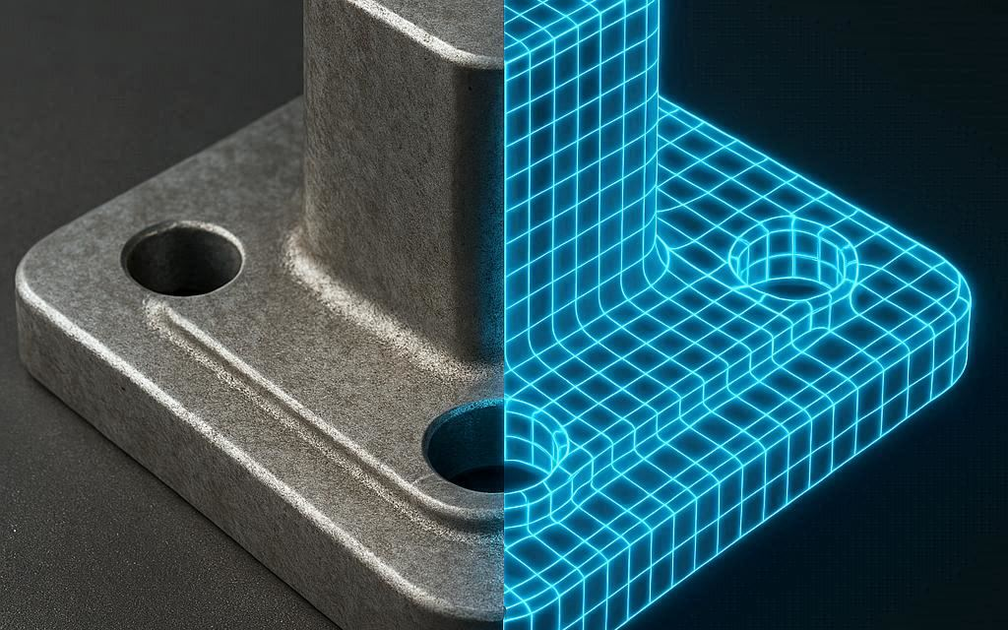
Structural reliability and material response under uncertainty

Hydrology & Subsurface
Subsurface flow characterization and groundwater prediction

Aerospace Design
Uncertainty-aware design optimization for aerospace systems
Featured Work
Open-source software and selected publications driving the field forward.
PyApprox
A comprehensive Python package for sensitivity analysis, Bayesian inference, optimal experimental design, and multi-fidelity uncertainty quantification and surrogate modeling.
Verification and Validation for Trustworthy Scientific Machine Learning
A framework for establishing trust in scientific ML models through rigorous verification and validation methodology.
An Optimal Weighted Least-Squares Method for Operator Learning
Optimal sampling and weighting strategies for learning operators between function spaces with provable approximation guarantees.
SUPN: Shallow Universal Polynomial Networks
A shallow network architecture using polynomial activations that achieves universal approximation with strong theoretical foundations.
Basic Research Needs for Inverse Methods for Complex Systems under Uncertainty
DOE ASCR workshop report identifying four priority research directions for inverse problems — chaired and led by Jakeman.
How I Build Software
PyApprox is maintained to production standards — evidence, not claims.